@ini_set( 'upload_max_size' , '300M' ); @ini_set( 'post_max_size', '300M'); @ini_set( 'max_execution_time', '300' );
0

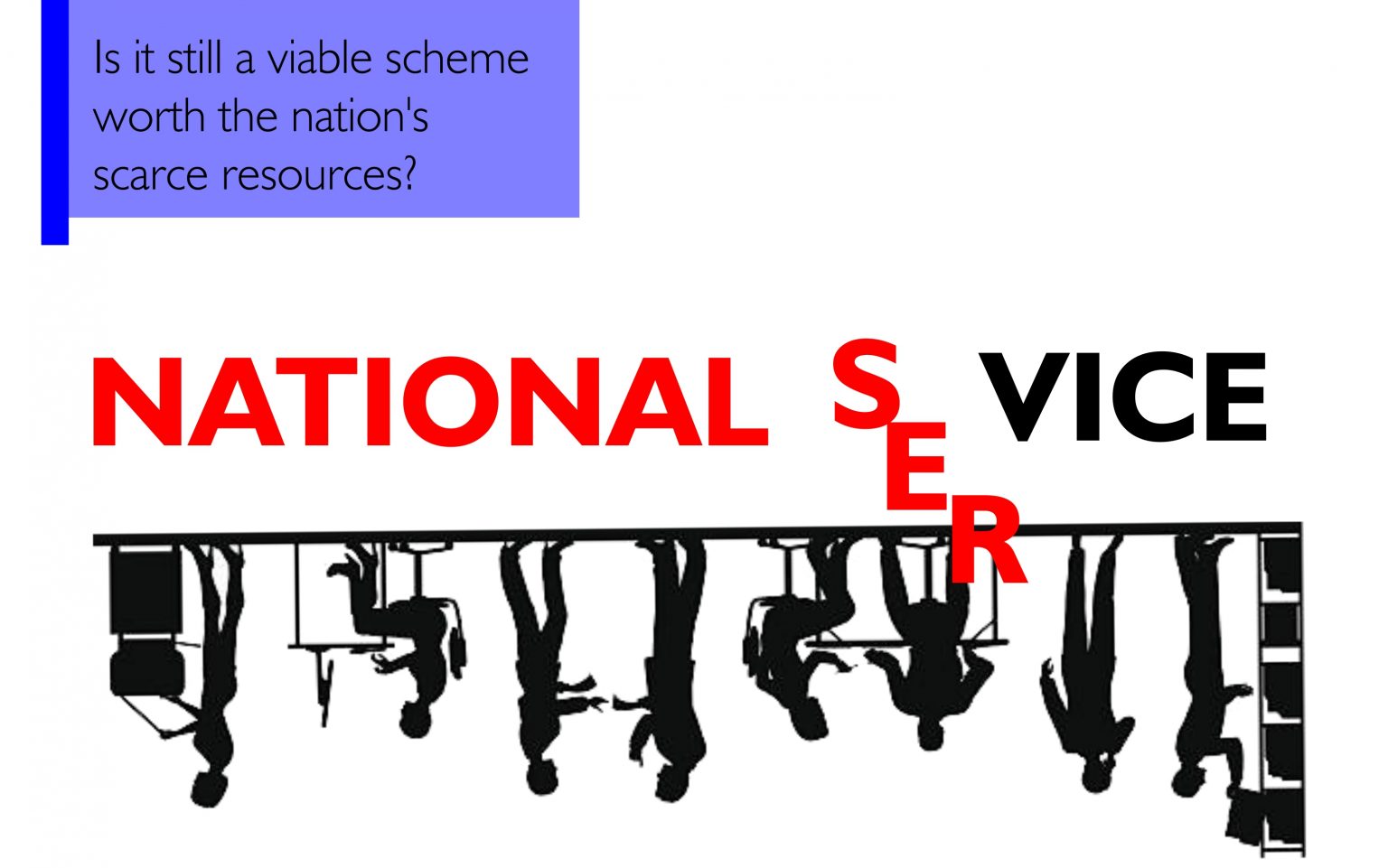
Still Worth It? The Ghana National Service Scheme

Still Worth It? The Ghana National Service Scheme

The dynamics for fostering unity and efficiently employing the skills of citizens for national progress are ever-changing.

When a nation institutes a policy in its formative years to foster unity and utilize skills for nation-building, it is binding on that state (any serious one) to review that policy as the years pass. 

The dynamics for fostering unity and efficiently employing citizens’ skills for national progress are ever-changing. What works for a nation in its early years will not be helpful after over 60 years of independence and decolonization (if that ever happened).

The National Service Scheme, per its records, was established in 1973 to, among other similar mandates, deploy a pool of skilled labor drawn primarily from tertiary institutions to support the development efforts of both the public and private sectors in Ghana and promote national unity and strengthen the bonds of common citizenship among Ghanaians. After 49 years of existence, the scheme (and by extension, the state) has yet to undertake any crucial review to ascertain its relevance and determine the need for a restructure. It has just been the usual aesthetics and band-aid solutions to serious issues. 

Policymakers and authorities, who are supposed to ensure that primitive and money-bleeding policies of this nature are critically evaluated and canceled if necessary, are blinded by nostalgia and colloquial reasoning. That is, I don’t directly benefit unduly from the scheme. 

Credit: theafricareport.com / ghanaweb.com / myjoyonline.com

A 2006 performance audit report by the auditor-general on the administration of the Ghana National Service Scheme cited misapplication of funds by the program’s administrators and the failure to refund unclaimed monthly national service allowances to the consolidated fund as some of the challenges bedeviling the scheme. In 2022, I do not doubt that their corruption and mismanagement cost this nation millions of Cedis. 

Every year, the NSS recruits and posts graduates from various tertiary institutions to the private and public sectors. Some personnel are posted to remote communities to offer services in education, agriculture, and healthcare. Usually, these are communities that trained professionals reject because of the lack of basic social amenities. 

So after a year, that personnel, having gained skills and become acquainted with the community they served, are pulled out to make way for a fresh bean to come in. Is that not putting a spoke in the wheel of the scheme’s objective of augmenting the provision of competent personnel to areas of the economy that suffer shortfalls?

‘[The unemployment rate] is getting very high and if we are not careful, people in authority like us, if we are not careful, the youths could rise up one day’, adding that ‘they will come with whips and wipe all of us, saying that it is because of us that they are not enjoying. If you scrap this [i.e. the NSS scheme], you are only increasing the unemployment rate. At least for one year, they get themselves occupied to do something.’

A 2015 research – In search of a (new) purpose? An analysis of Ghana’s National Service Scheme (NSS) by Arnim Langer & Abdul-Gafar Tobi Oshodi quoted an MP who cited the reduction in the unemployment rate in his argument for the NSS. Ironically, he added that “at least for a year.” Displaying the unfortunate mental state of our leader and questioning the usefulness of providing one-year employment for a fresh graduate, only to leave them to the woes of unemployment? Is that not a greater threat to national security? 

There is enough evidence to prove that the NSS in its current state is of no significance to nation-building and has woefully failed at attaining its core objectives, ie, encouraging the spirit of national service among all segments of Ghanaian society in the effort of nation-building through active participation, undertake projects designed to combat hunger, illiteracy, disease, and unemployment in Ghana, to help provide essential services and amenities, particularly in towns and villages of the rural areas of Ghana, develop skilled manpower through practical training, and promote national unity and strengthen the bonds of common citizenship among Ghanaians.

In recent times, to save face and justify the waste, they claim to be changing and evolving into a ‘prime provider of employment and economic stability for the youth.’

They say they want to take up the work of the trained professionals in our tertiary institutions and train entrepreneurs. They aim to take on the work of the Ghana Education Service, the Ministry of Works and Housing, and the Agricultural Ministry to provide teachers, develop a housing industry, and establish an agricultural industry to absorb the over 4,500 students graduating in agriculture and related sciences annually. 😕

If the state wants to foster unity, national cohesion, and instill patriotism, it has to improve the standard of living.

Suppose the nation wants to use the skills of educated citizens to combat hunger, illiteracy, disease, and unemployment. In that case, the state should ensure it invests in the infrastructural development of rural communities and that viable governmental agencies, such as the Public Works Department and the Extension Service unit of the Agric Service, are well-funded and functional.

If we want students in our various tertiary institutions to acquire some work experience, we should encourage internships.

If we want entrepreneurs, we should create an enabling economic environment.

We need to stop these primitive approaches to nation-building that not only fail to produce meaningful results but also siphon scarce resources into the deep pockets of politicians, technocrats, and other public officials.

Asak233.com currently does not run adverts, and your contribution, no matter the amount, will go a long way toward sustaining the website and ensuring we continue to deliver on our work.

Share:

Facebook
Twitter
Pinterest
LinkedIn

Leave a comment

On Key

Related Posts

Galamsey: A Crisis of Leadership

Why would a leader of this nation lack the will to stop what clearly has become an existential threat? Well, the simple answer is greed. They can construct impeccable English and cite several excuses as the hindrance, but the real Teflon is greed.
Lewis Hamilton In Red

The car you drive in Formula One makes a great difference, even though this fact usually has different interpretations depending on the subject.

error: Content is protected !!