
@ini_set( 'upload_max_size' , '300M' ); @ini_set( 'post_max_size', '300M'); @ini_set( 'max_execution_time', '300' );
0

Population And The African Development Conundrum

Population And The African Development Conundrum

The population size of a country can be a force for good when empowered or a tool for destruction when left to fallow.

Size is one of the excuses I often hear people give when we talk about changing the fortunes of this country. This cuts across all spheres of endeavor, including art and entertainment. They say our population size does not make good economic sense regarding investment. We can’t guarantee a good return. They often cite Nigeria, stating that its size is essentially the goose that laid the golden egg for their presumed successes. Okay.

A country’s population size is indeed a success factor. That’s why we see prosperous nations take a keen interest in adjusting their trajectory. But the most important thing is the quality of that population. Their level of understanding, worldview, and purchasing power that the population wields. 

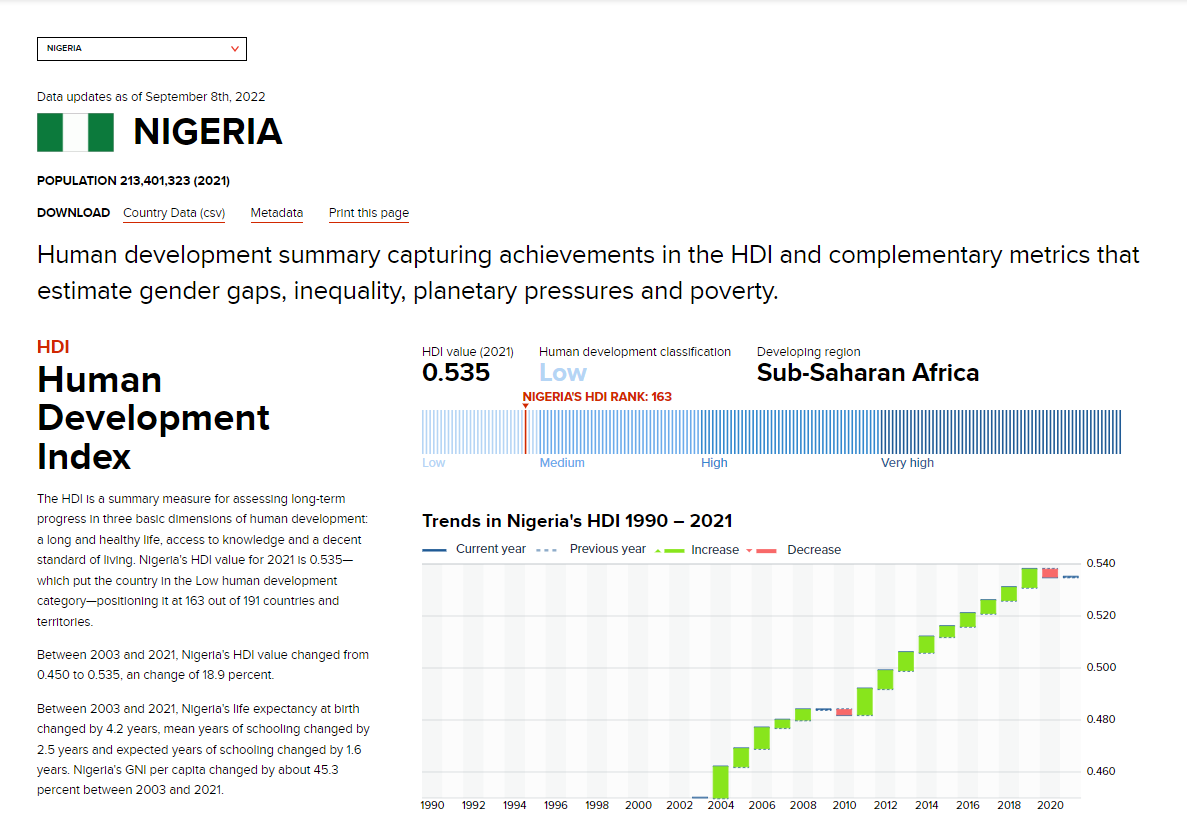
The population size of a country can be a force for good when empowered or a tool for destruction when left to fallow. Nigeria is a resourceful nation with a vast population, but it has failed to make meaningful progress and remains stuck in crisis because most of its citizens are underdeveloped. 

Having a large population size and the majority languishing in poverty is the surest way to create mayhem. Our issue is leadership, but it is more complex because our leaders are a reflection of our community. They come from us, and we elect them. This is a conundrum, but let’s move on. Today is not about leadership but population (as if they are mutually exclusive). 

A casual Google search will reveal that the list of the world’s most prosperous countries does not correlate with the list of the world’s most populous nations. 

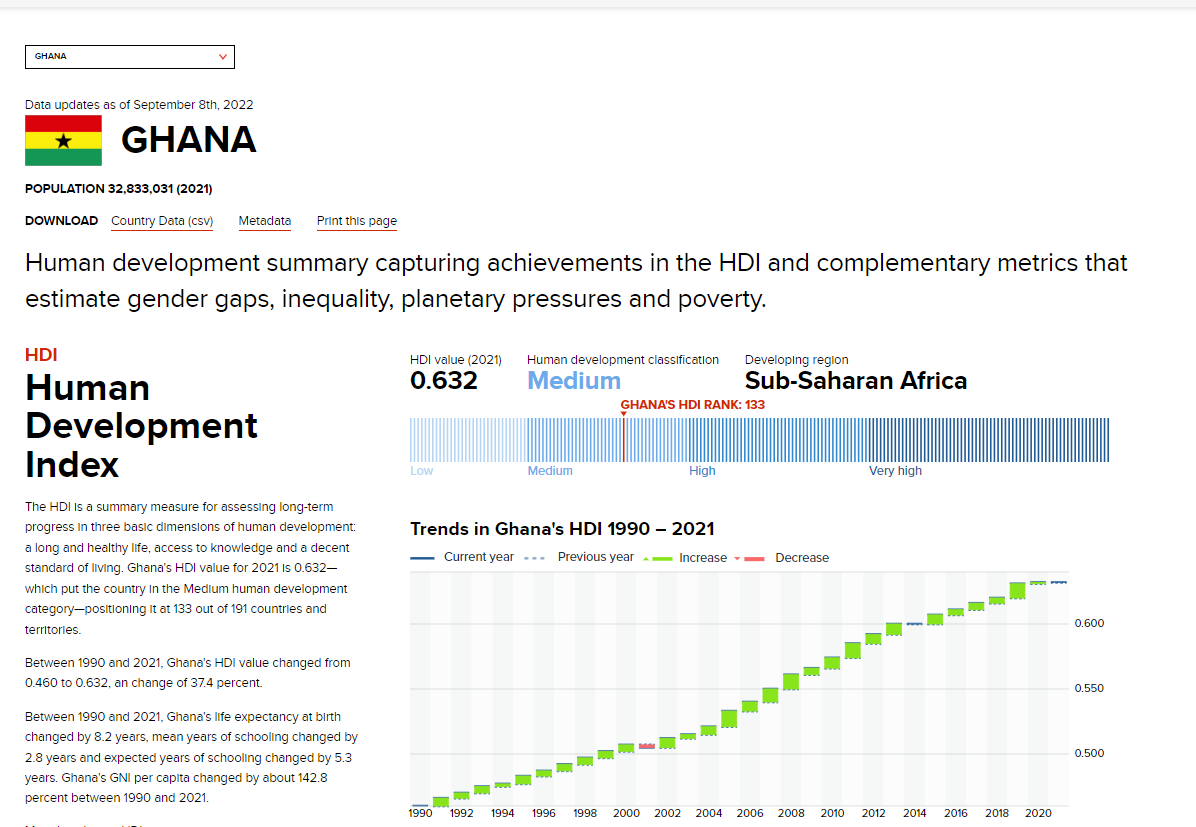
The world’s most prosperous nation, Denmark, has a population of about one-sixth of Ghana’s, yet its GDP is enough to afford a three-course meal with good red wine to wash down our measly $77.59 billion.

The total population of the top 5 most prosperous nations is almost the same as the population of Ghana, with a difference of less than 3 million people. Yet these countries have developed their natural and human resources to be self-subsistent and trade with the rest of the world to earn enough to create decent and befitting living conditions for people within their geography. 

The notion that large population size is still a panacea for development and progress is an archaic logic. Maybe if we were still in an era where manual labor was king and invading other people’s territory was the norm (not reserved for the few so-called superpowers), things might be different. 

The argument might be that most of these nations have existed for centuries and have capitalized on exploiting other nation-states to build their fortunes. Well, true, but what about a small, natural resource-scarce country like Singapore? They did this through leadership, determination, and ambition. Not a mere vast population size. 

A selling point of the newly formed African Continental Free Trade Area (AfCFTA) is that it is currently the world’s largest trading bloc, considering its market size relative to the continent’s population. They ring this bell without considering the quality and purchasing power of this market. We must be aware that unless those ailing leaders across the continent begin to make conscious political and policy changes and radically invest in human development, the AfCFTA, coupled with our enormous population size, will be useless to our progress as our natural resources. 

We often cite selling to foreign markets to boost exports for balance of payment purposes when discussing value addition and industrialization. This is mainly because we do not have a viable market at home due to poverty, and since we do not control the capital that goes into these investments, we cannot make long-term commitments that could help satisfy local needs. So there is postage on most of the profit, our sheets remain unbalanced, and our currencies are left to the whims of gravity like Granny’s bosom. 

They say we have a very youthful population, and it is expected to increase in the coming years because we continue to reproduce. This could be good news as other parts of the world are experiencing a decrease in their youth, resulting in a higher proportion of older adults. But with our current setting, what we have is not an opportunity but a timer strapped to tons of C4 at a nuclear stockpile ticking to destruction. 

I heard somewhere that Africa will prosper when Nigeria prospers. This is true, especially in the context of the so-called sub-Saharan Africa. The country sits on loads of natural resources and a population with a natural adroitness for trade and commerce. The ripple effect of empowering such a large number of promising individuals is unfathomable. Their current status is a remnant of exploitation, yet somehow enviable due to individual ingenuity; can you imagine their impact with some sincere altruism? 

Size matters, and it will be folly to state otherwise, but quality is assurance. Hiding behind statistics and wishful ambitions won’t lead to progress. Firstly, we must mobilize to sustain our ‘measly’ population in anticipation of growth. If we can’t succor what we have now, how can we manage a large population? 

A man posses for a picture in a shirt with the inscription - In Africa, Size Matters (Chale Wote 2017) by Allen Sefadzi Anewu Komla for ASAK233.

Asak233.com currently does not run adverts, and your contribution, no matter the amount, will go a long way toward sustaining the website and ensuring we continue to deliver on our work.

Share:

Facebook
Twitter
Pinterest
LinkedIn

Leave a comment

On Key

Related Posts

Galamsey: A Crisis of Leadership

Why would a leader of this nation lack the will to stop what clearly has become an existential threat? Well, the simple answer is greed. They can construct impeccable English and cite several excuses as the hindrance, but the real Teflon is greed.
Lewis Hamilton In Red

The car you drive in Formula One makes a great difference, even though this fact usually has different interpretations depending on the subject.